Is raising harder for first time founders?
Second time founders get through our first screen more often. Once a company has paying customers, being a first time founder matters much less.
We reviewed the companies from Central and Eastern Europe that applied to BADideas: who the founders are and what their pitch decks show. Second time founders get through our first screen more often. Once a company has paying customers, being a first time founder matters much less.
Founders who started a company before get further
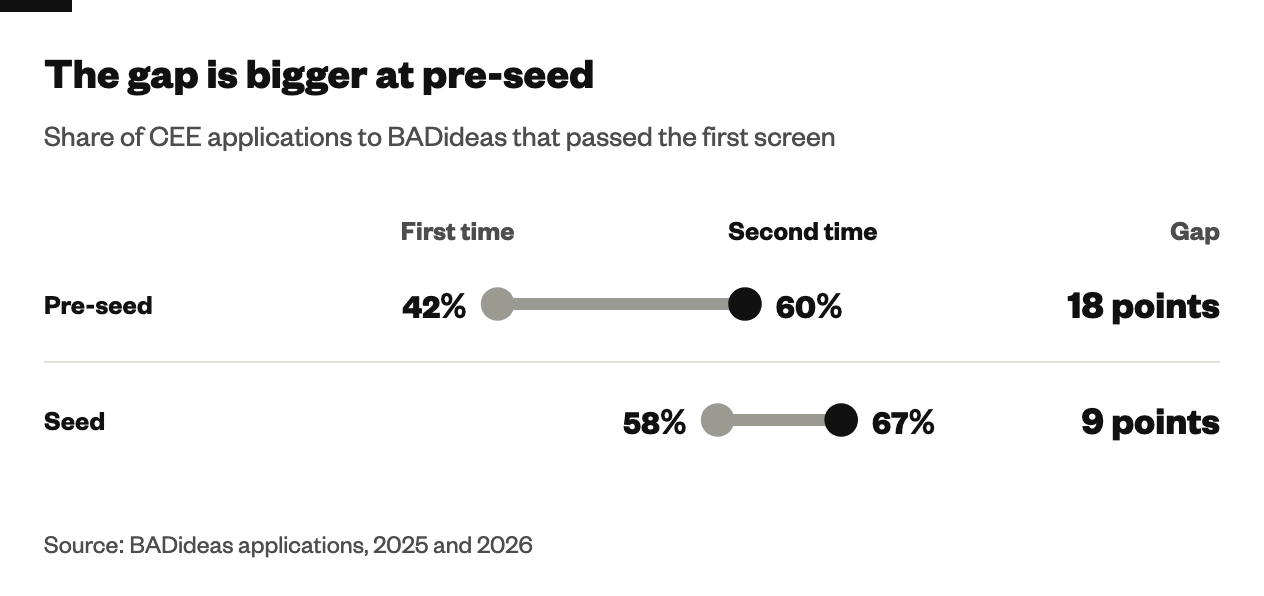
Nearly two in three teams that describe their founders in the deck include someone who has started a company before. Those teams passed our first screen 60% of the time, against 46% for first time teams, and the gap is bigger at pre-seed: 18 points against 9 points at seed.
Others see the same edge in Europe. PitchBook reports that founders with at least one earlier company raised a median of €4.3 million this year, 72% more than first time founders.
Second time founders with no exit in the deck passed our first screen 56% of the time, still ahead of first time teams. With an exit that rises to 69%.
First time founders with customers are close to second time founders
The biggest difference is for pre revenue applicants, where we have to rely more on the team and less on traction. Once a company has paying customers, being a second time founder brings much less.
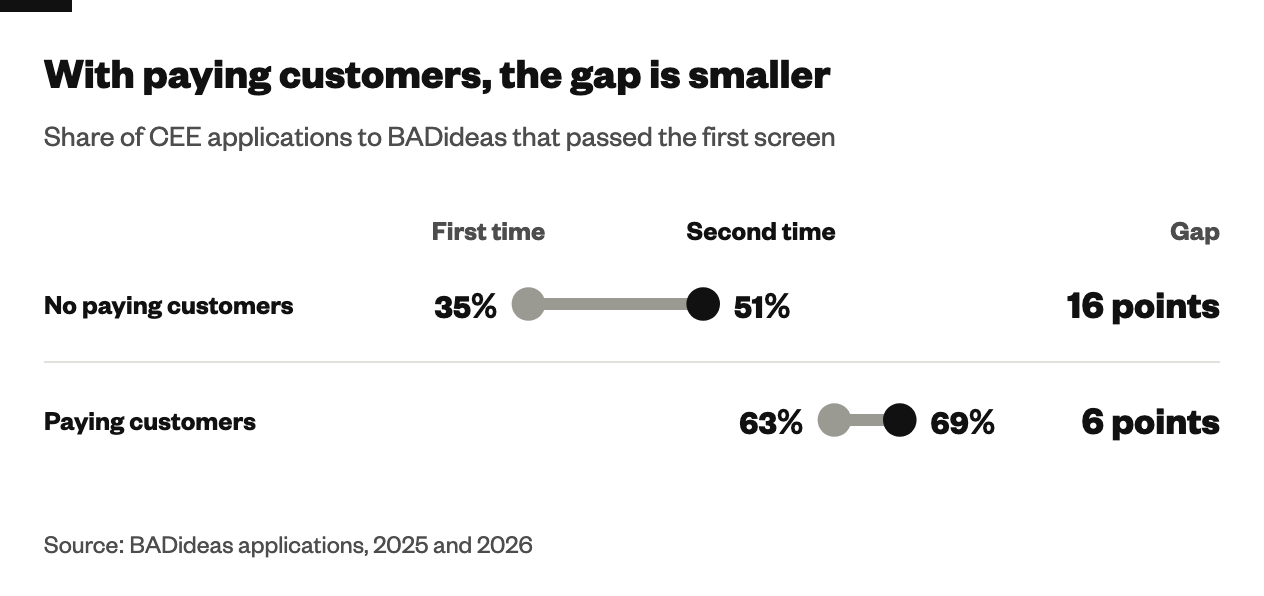
More first time founders with paying customers passed (63%) than second time founders without them (51%).
Any sign of traction helps. For pre revenue founders, even naming a customer or a pilot goes with a better chance: among first time founders with no revenue yet, 55% of those who named one passed our first screen, against 33% of those who did not. CRV, a US venture fund, says the same: pilots and letters of intent count before revenue, and the stronger case names the buyer.
Put first what you have
Whichever group you are in, make sure the deck says who the founders are. Decks that listed no founders at all passed 26% of the time.
If you have started a company before, put the team first. Your track record carries weight with us, so make it easy to find.
If you are a first time founder, put most of your effort into showing traction. About one first time deck in four names a customer in its text, so this week ask your best customer or pilot if you may name them.
If you are a first time founder with no revenue yet, explain how you will get there: who will pay first, how you will reach them and what it will cost.
How we measured it: we read the pitch decks that founders from Central and Eastern Europe sent us and compared how often they passed our first screen, which means reaching our investment committee, in 2025 and 2026. This is a link, not a cause.
Ask a follow up
Send the deck. We read every one.
Yes or no in five business days, with the reason either way.